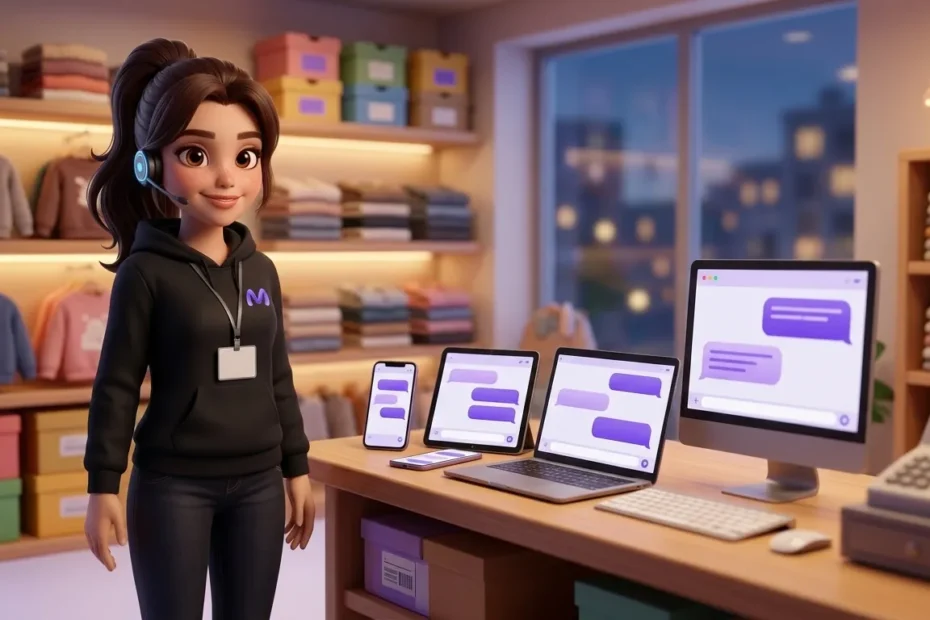
There are five types of AI tools for sales, if categorised by the tasks they take off people’s hands. The first type communicates with customers itself via messaging apps and on the website. The second resides in the CRM and assesses enquiries. The third transcribes and verifies calls; the fourth writes copy; and the fifth is a general-purpose assistant that the manager operates manually. The most useful of these is the one that addresses your most costly loss.
Let’s imagine an online shop selling children’s clothing based in Vinnytsia; let’s call it “Gorishok”. It sells via Instagram and its website, manages orders in a CRM system, and has two managers working in shifts. Every day, the owner sees adverts for “AI for sales” and lists of twenty different services. Many of these are designed for departments that cold-call hundreds of unknown contacts every day. She needs to work out which of these are relevant to “Gorishok” and which aren’t.
Contents
- Five types of AI tools for sales and what each one takes off your hands
- A tool that communicates with the customer on its own
- The AI within the CRM evaluates applications and generates a forecast
- Analysis of calls and correspondence
- Text generation and a general-purpose chatbot
- What happens when there are too many tools
- How to choose a sales tool and test it on your own messages
- Frequently asked questions
Section: AI for business
Five types of AI tools for sales and what each one takes off your hands
The table below groups tools according to the outcome you will see in the team’s work. The same service may combine two types, but usually one of them is the main one, and that is the one you pay for.
| Type | What work does it do? | Where you can see the results | Who needs it first? |
|---|---|---|---|
| A conversation with a client | Responds via Direct and on the website, selects products and processes orders | Fewer unanswered messages, orders placed at night | Shops and services that sell by post order |
| AI in CRM | Evaluates enquiries, suggests the next step, forecasts sales | The manager knows who to ring first | Teams with a long history of deals |
| Analysis of conversations | Decodes calls, searches for missing steps in the script | A manager can spot mistakes without listening in | Telephone sales |
| Text generation | Writes letters, product descriptions and draft replies | Less time spent on routine writing | For those who write a lot of messages to customers by hand |
| General-purpose assistant | Answers any questions the manager may have in a private chat | Faster drafts and brainstorming | In addition to any of the types listed above |
For “Gorishko”, the first line is crucial. All sales are made via messaging; there are hardly any phone calls, and every transaction is small and quick. The rest of the lines will be needed later, or perhaps never at all – and that’s fine.
A tool that communicates with the customer on its own
This type is suitable for people wherever they message: Instagram Direct, Telegram, Viber, or a website widget. Of all the AI tools for sales, this one delivers the quickest visible results in small-scale retail, because every unanswered message represents a potential sale that might go to another shop.
At 22:40, a mum writes to “Gorishka” via Direct: “Do you have a blue winter jumpsuit in size 98? How much is delivery to Zhytomyr?” The managers are already at home. Without automation, she’ll receive a reply at nine in the morning – assuming she hasn’t bought it elsewhere by then.
Script-based chatbot
A classic chatbot guides the customer through the buttons: “Catalogue”, “Delivery”, “Contact a manager”. It is obedient and predictable, but a question phrased in your own words stumps it. The bot won’t know about height 98 or the colour blue unless someone has programmed that branch in advance.
An AI manager that reads a catalogue
The language model-based tool understands any question and searches your data for an answer. The Marichka AI sales manager, for example, retrieves the product range by scanning the website or from PDF and Excel files, updates prices and stock levels, responds within 10–30 seconds and creates an order in the CRM. It forwards complex queries to a manager along with the conversation history. It responds solely from the knowledge base, so it will not promise sizes that are out of stock. More details on how, how an agent guides a client from the initial enquiry to placing an order, we wrote separately.
The AI within the CRM evaluates applications and generates a forecast
The second type is integrated into the accounting system. It assigns a score to enquiries based on the likelihood of a purchase, reminds the manager of stalled deals, and produces a monthly forecast.
It works on the basis of historical data. The model learns from which enquiries have previously resulted in a payment and which have not, so it needs a large number of closed deals with fields filled in consistently. Where a manager has been handling a deal for months, this kind of guidance helps ensure that a ‘warm’ lead isn’t lost amongst the ‘cold’ ones.
At “Gorishko”, the sales process takes just a few minutes: I asked a question, received an answer, and completed the order. There’s no point in prioritising this sort of enquiry; you simply need to respond to it quickly. Once the shop has grown to the point where it has its own call centre or is operating on a wholesale basis, it’s worth revisiting this approach.
Analysis of calls and correspondence
The third type converts the conversation into text and analyses it. It checks whether the manager quoted a delivery price, suggested a related product, or interrupted the customer. The manager receives a summary and does not have to listen to the recordings for hours on end.
It is most effective in sectors where sales are conducted over the phone: clinics, estate agents, car dealerships and delivery services that take orders by telephone. For a shop that sells via correspondence, the CRM system with its chat history takes care of some of this work. The owner of “Gorishka” can read through a dozen conversations once a week and see the same information without needing a separate subscription.
There’s also a simpler reason not to rush. An analysis of the calls shows that the manager made a mistake, but isn’t answering clients’ enquiries on his behalf. If the main problem is that nobody is answering at 11.00 pm, a report on the quality of morning calls won’t solve it.
Text generation and a general-purpose chatbot
The fourth and fifth types are the easiest to try out: open the chatbot and ask for a description of a new collection or a polite response to a complaint. The managers at “Gorishka” are most likely already doing this. When it comes to product descriptions, this really saves an evening’s work: the assistant provides a draft, and a staff member corrects the fabric composition and size chart.
Salespeople’s expectations are high here. According to Salesforce (the ‘State of Sales’ study, a survey of 4,050 sales professionals conducted in August–September 2025), salespeople expect AI agents to reduce the time spent writing emails by 36 per cent, and the time spent searching for information about a prospective customer by 34 per cent.
There are limitations to this type of service too. A general-purpose assistant cannot see your stock levels, so they’ll happily state that the blue jumpsuit is “in stock”. They aren’t on the chat platform, so the manager has to copy and paste the text back and forth. It’s best not to include customers’ phone numbers and addresses in this sort of chat: this is personal data for which the shop is responsible.
That is why AI services for sales that interact directly with customers are integrated with the product catalogue and the CRM. A general-purpose assistant remains a tool for the manager herself, and that is its proper role.
What happens when there are too many tools
When AI sales tools are purchased one by one to tackle each individual problem, the team gets bogged down in tabs. According to the same Salesforce study, published on 3 February 2026, a salesperson spends, on average, only 40 per cent of their working time on the actual sale. The rest is taken up by tasks related to sales, and the report specifically highlights manual data entry as one of these.
In the same Salesforce report, 51 per cent of sales managers say that siloed systems are holding back their AI projects. Every new service that isn’t linked to the CRM means yet another place where some customer data is stored, and yet another task that managers have to carry out manually.
These responses came from salespeople and managers in various countries, and a small team feels this even more acutely. When there are two female managers, every extra tab takes up time that isn’t there. That’s why these six solutions for a small business’s sales department should be assessed as follows: how many windows do they remove from the working day, and how many do they add?
For “Gorishko”, a good result looks like this. The manager opens the CRM in the morning and sees that the overnight orders have already been processed, and in a separate list there are three conversations that the AI has forwarded to her, along with an explanation. She doesn’t have to copy anything from the chat into the customer file.
How to choose a sales tool and test it on your own messages
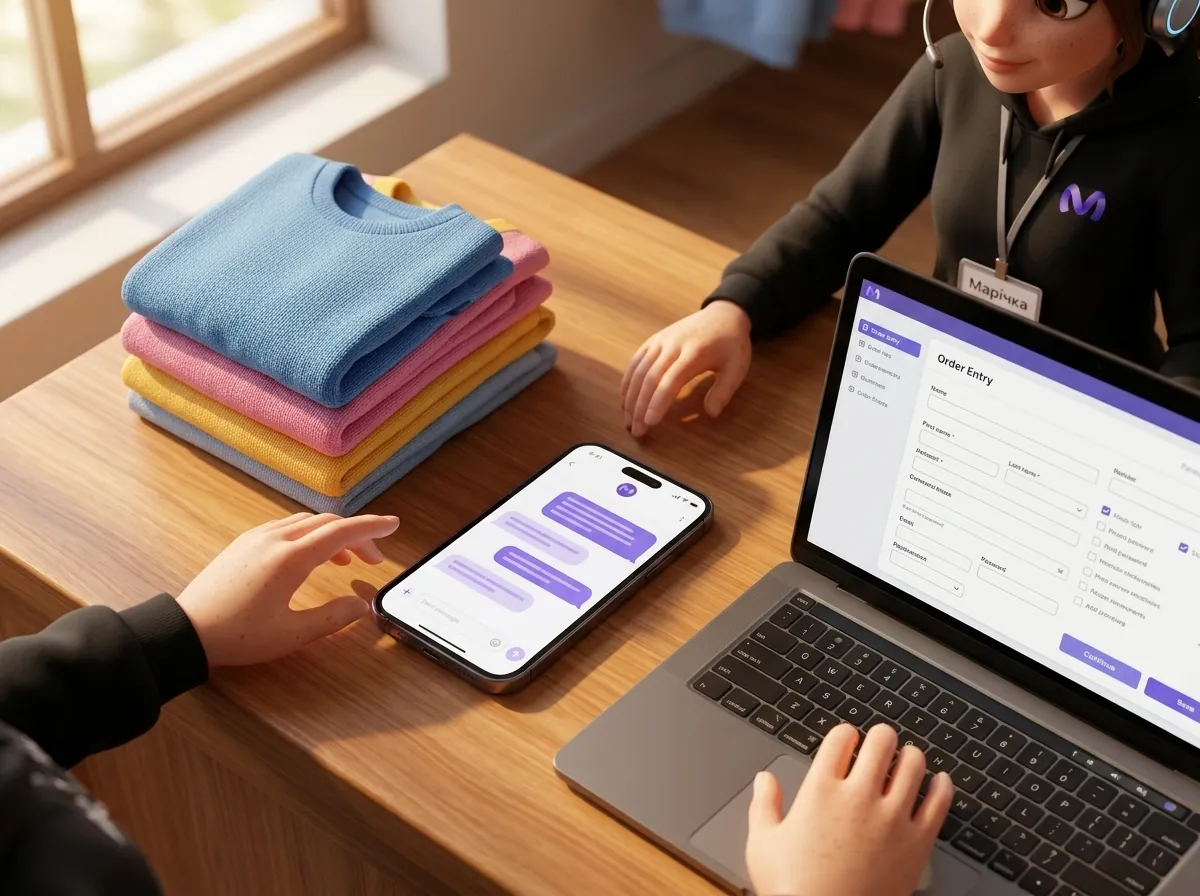
A seller’s demo always looks good because it’s been tailored specifically for the demo. You need to test it on your own catalogue and with your own customers, and a week’s trial will be enough for that. The procedure for a shop like “Gorishka”:
- List 20 real messages from Direct over the past week, including any mistakes and abbreviations, exactly as the customers wrote them.
- Please upload the catalogue and the delivery and returns policy exactly as they are at the moment, without any special preparation.
- Ask the tool these 20 questions and work out where it answered correctly, where it passed the question on to a human, and where it made something up.
- Place a test order and check whether it has appeared in the CRM with all the fields filled in, without having to copy them manually.
- Change the price of a single product on the website and see when the tool starts displaying the new price.
Please note the third point. An honest “I’ll check with the manager” is better than a confident answer based on a size that isn’t available, because a wrong order costs more than a moment’s hesitation.
Lists of the “best AI tools for sales” are useful as an overview of the market, but for a small shop, the choice starts with a different question: where are you losing money this month? If it’s unanswered evening messages, start with a tool that chats to customers and test it on the very same 20 messages you’ve already selected.

Ready to connect Marichka to your channel?
Marichka AI will help you automate communication, reply to clients 24/7 and increase sales.
Frequently asked questions
What types of AI tools are there for sales?
It is handy to categorise them according to the tasks they handle. Some chat with customers via messaging apps and on the website; others work within the CRM system and assess enquiries; others transcribe and check calls; and still others write copy. Then there are the general-purpose assistants, which the manager uses themselves.
Which AI tool should a small shop start with?
It’s the one that prevents you from losing your most valuable customers. For a shop that sells via Instagram and its website, this usually takes the form of unanswered messages in the evenings and at weekends, so it makes sense to prioritise a tool that responds to customers. CRM forecasting and call analysis can be put on hold until a history of transactions has been built up.
Is it possible to make do with a standard chatbot instead of a dedicated service?
It’s fine for draft product descriptions and replies. The problem is that a general-purpose assistant can’t see your stock levels and isn’t on Direct: the manager still has to copy the text back and forth. It’s best not to include customers’ personal details in this sort of chat at all.
Will AI tools replace sales managers?
In a small shop, they handle repetitive conversations and manual data entry. Returns, complaints, non-standard orders and decisions on discounts are still left to the staff. A good tool forwards such conversations to the manager along with the conversation history, so that the customer doesn’t have to explain everything all over again.
How much do AI sales tools cost?
Most services operate on a monthly subscription basis, with the price depending on the number of messages, users or call minutes. With Marichka AI, the entry-level plan costs €49 a month for 1,000 messages, with the first 7 days free. Before paying, work out your typical weekly usage and multiply it by four.