AI coaching for sales managers works as follows: the service transcribes every recorded call and every conversation, compares them against the script and a list of common objections, and highlights to the manager the parts where the sales manager missed a step or gave up at the first sign of difficulty. The coaching itself remains a human task. The AI takes on the listening part, for which a small sales department simply doesn’t have the time.
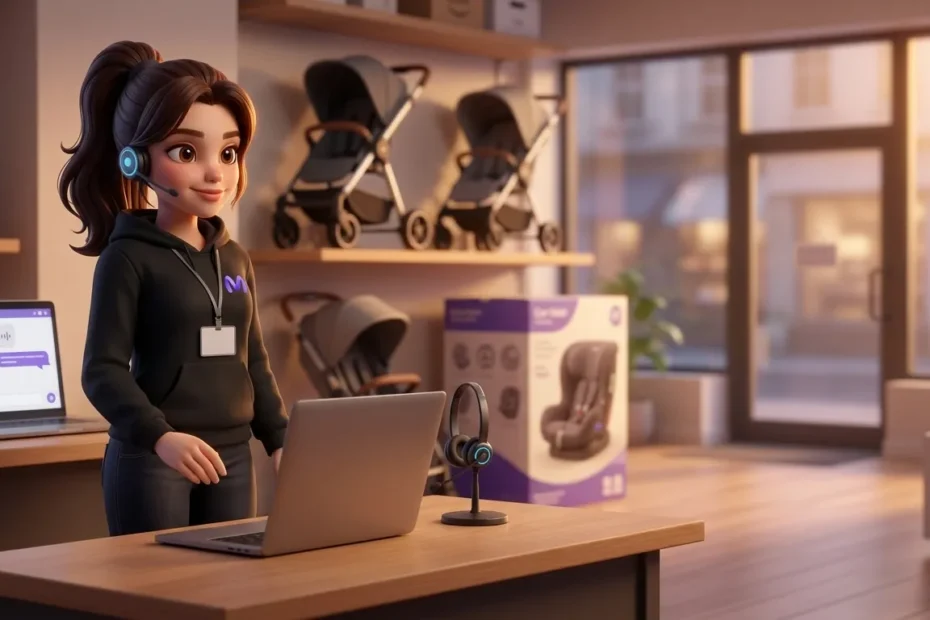
Imagine an online shop selling prams and car seats. The owner is Victor, and there are three managers: Irina, Denis and Oleg. They call back customers who’ve submitted enquiries via the website and reply to messages on Instagram Direct, whilst customers spend weeks choosing a pushchair and comparing prices with other shops. Victor sees deals in the CRM that are stuck at “considering” status, but he only hears the conversations when he’s standing right next to a manager. Next, we’ll look at exactly what the AI analysis of managers’ calls will show him, where he can’t rely on it, and how to turn the report into a learning opportunity.
Contents
- AI coaching for sales managers, using a pram shop as an example
- Unresolved objections and missed steps in the script
- The report arrives on Friday, and I have a meeting with the manager on Monday
- What a machine won’t pick up on in a conversation
- Call recording, client consent and pre-call checklist
- Messages sent via Direct also need to be analysed
- Frequently asked questions
Section: AI for business
AI coaching for sales managers, using a pram shop as an example
Victor’s phone system is already recording calls, but nobody actually listens to the recordings. The analytics service he’s signed up for retrieves them daily, transcribes them into text and goes through each conversation against a checklist that Victor drew up himself based on his script: he said hello and introduced himself, finds out the child’s age and where they’ll be going for a walk, suggests two or three models, addresses any objections, and agrees on the next step.
On Friday, Victor receives a report on each manager. There is no overall rating of “7 out of 10”. Instead, there are specific conversations with timestamps: at what minute the client said “we’ll discuss it with my husband”, what Irina replied, and how the conversation ended. Victor opens the relevant section, listens for a minute, and already knows what to discuss with Irina on Monday.
This is what AI sales coaching looks like on English-language platforms, where this category originated. The difference from traditional call quality monitoring lies in who is listening. Previously, a manager would select a few recordings at random. Now the system listens to everything, and the person is provided with a ready-made list of points where they should intervene.
Surveys show why this is necessary at all. According to Salesforce (State of Sales, 7,775 sales professionals across 38 countries, December 2022), only 26 per cent of salespeople receive one-to-one coaching at least once a week. In a shop with three managers, where the owner is responsible for both purchasing stock and handling advertising, this figure is often zero.
Unresolved objections and missed steps in the script
The most common scenario in the initial reports is simple: the manager hears an objection and agrees with it. The client says, “I’ll have a look,” Denis replies, “Of course, do get in touch if you need anything,” and hangs up. In the CRM system, this deal is recorded as “considering”, even though the conversation actually ended in a refusal, which nobody tried to probe further.
The gaps in the script are just as obvious. Oleg talks well about pushchairs, but in half of his conversations he doesn’t ask whether a car seat is needed. Iryna always finds out the child’s age, but rarely arranges a specific follow-up. Each of these minor details may seem trivial on its own, but over the course of a week, they form a pattern in the report that a manager would never have noticed just by listening.
There are details that owners don’t usually think about until they see the report. One manager promised to ring a client back on Thursday, but Thursday isn’t listed on the deal card in the CRM – the promise remained only in the conversation. Three salespeople give different answers to the same question about delivery: Irina says two days, Denis says four. The opposite can happen too: a manager spends ten minutes talking about the depreciation of a pram, whilst the customer never gets a chance to say what really matters to her, and then even the question she asked in passing goes unanswered because the conversation has taken a different turn.
The second of these findings concerns the shop as a whole. If three people give different answers about delivery or exchanges, the problem is that the correct answer isn’t written down anywhere.
The report arrives on Friday, and I have a meeting with the manager on Monday
The report itself doesn’t change anything. The training begins when the director sits down with the manager and they listen to two or three clips together. That’s where the AI ends, and the work begins – work that no programme can do for a person.
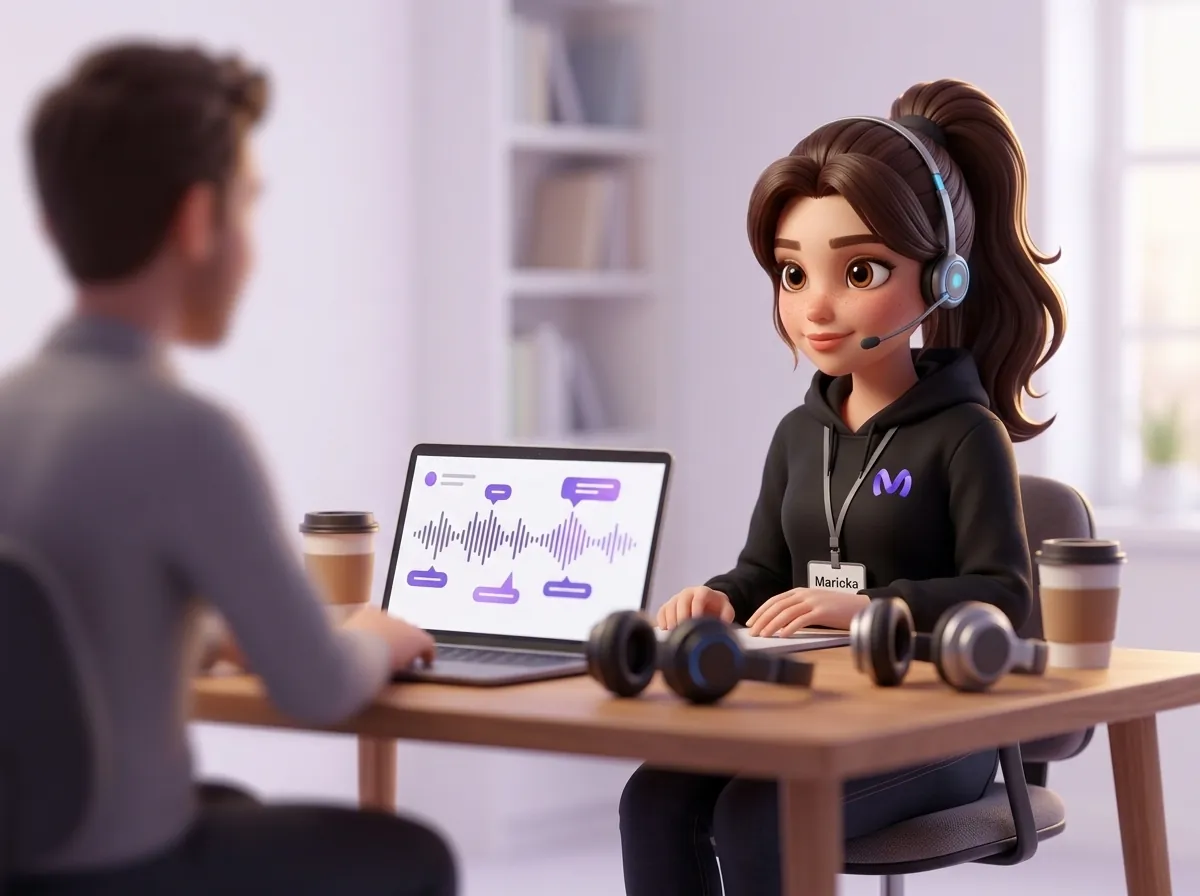
Gong Labs, the research division of the call analytics service, provides a useful guide. Chris Orlob analysed how over 5,000 users of the service work with call recordings (article from March 2017, updated in March 2026). The most effective managers left approximately three positive comments for every critical one, worked with recordings more often than they listened to live calls, and devoted the most attention to managers with average performance.
For Victor, this implies a specific structure for the conversation: first, the part where Irina did everything right, and an explanation of exactly why that worked; then one, or at most two, points for improvement. If you bring a report with twenty mistakes, the manager will only feel that he is being scrutinised.
After the discussion, the manager practises the new response: either out loud with their line manager or on a simulation tool, where AI plays the role of a customer who has doubts about the price. A week later, the next report will show whether anything has changed in real calls. This cycle of “report, discussion, practice, new report” is what coaching is all about, whilst analysing recordings simply saves the manager hours of listening time.
What a machine won’t pick up on in a conversation
Speech recognition makes mistakes, and there are more reasons for this in a Ukrainian shop than in the supplier’s demo video. The customer speaks a mixture of Ukrainian and Russian, a child is crying in the background, and Denis is calling from the warehouse on speakerphone. The transcription distorts the words, and an analysis based on distorted text may attribute a mistake to the manager that never happened.
The second limitation is context. The programme doesn’t know that Oleg’s customer is buying her third item in the shop and that he’s deliberately not mentioning the warranty a second time; it doesn’t know that “well, I’ll think about it” was said with a smile, and that the order arrived the very next day. The checklist treats a conversation with a new customer the same as one with a regular one, and a flexible manager may be penalised for deviating from the script where it was actually the right thing to do.
The third limitation concerns conclusions about people. The report shows that Denis often agrees with objections. It does not explain why this is the case: perhaps he lacks knowledge about the product, the manager is tired, or Denis simply does not believe that the pram is worth the price. This can only be ascertained through conversation. Deciding on a bonus or dismissal based on an automated assessment is the quickest way to teach a team to speak “for the sake of the report”, and this does nothing to improve the customer experience.
So the rule for Victor is simple: he listens to every lead he takes to his manager first. AI coaching for sales managers saves him hours, but the final say on a candidate remains with the manager.
Call recording, client consent and pre-call checklist
Before connecting the service, Victor needs to prepare a few things. Without them, the analysis will either fail to run or produce reports that nobody trusts.
- Recordings in standard quality. If managers are calling from their personal mobiles, there’s nothing to analyse: first of all, you need a call recording system.
- Customer notification. An automated message at the start of the call stating that the conversation is being recorded. You should consult a solicitor regarding how to obtain consent, how long to retain the recordings, and whether they may be transferred to third-party services.
- A checklist of 6–10 items taken from your script. The more specific the items are (e.g. “asked the child’s age”), the more useful the report will be. Vague items such as “was polite” are assessed by the system at random.
- A list of objections specific to your niche, with examples of appropriate responses. Without this, the service will identify objections but won’t tell you whether they’ve been addressed effectively.
- Agreement with the team. Managers need to be told by the owner before the launch why this is being done and that the reports will not count towards their bonus.
It’s worth checking the transcription accuracy on your own recordings. Pick ten calls where you know exactly what happened and compare them with the transcript. If there are lots of mistakes, no checklist will fix that.
It is best to regard the first month of AI coaching for sales managers as a settling-in period. After each report, Victor will identify points where the service interprets things differently from him: for example, the system counts “suggested a car seat” even when Denis merely mentioned it in passing at the end of the conversation. Such points should be rewritten more specifically: “offered a car seat and specified which pushchairs it is compatible with”. By the end of the month, the checklist will have stabilised, and from that point onwards, the differences between the reports will show how the managers’ work is changing.
Messages sent via Direct also need to be analysed
Some of the pram shop’s sales take place on Instagram, where it’s even easier to analyse: the text is already there, so there’s no need to transcribe anything. Those same missed steps are evident in the messages. The manager replied with a price to the question “how much does it cost?” and didn’t ask what age the child was for whom the pram was being sought. The customer wrote “a bit pricey” and received no reply until the following morning.
In his messages, Victor will notice one more thing: many of the direct messages are the same questions going round and round – about availability, delivery times, and whether a car seat will fit on this pushchair’s frame. Managers spend time on these enquiries, time they then lack for calls with those who are already ready to buy. These replies can be handled by an AI manager. Marichka AI responds on Instagram, Telegram, Viber and the website within 10–30 seconds, draws its answers solely from the shop’s knowledge base, creates orders in the CRM, and forwards complex queries to a manager along with the chat history. How this process works, from the first message to the order, is explained in the article about Sales AI agent.
For Victor, this involves two parallel changes. The AI manager takes the routine tasks off the manager’s hands and, at the same time, standardises responses regarding delivery and returns, as it draws them from a single database, whilst call analysis reveals where Irina, Denis and Oleg are losing customers during difficult conversations, and provides material for weekly debriefs. You can start small: select the last ten calls that ended without an order and go through them using your own checklist. If, after that, you want to understand at which stage the shop is losing the most customers, Calculate the sales funnel for the week, and then decide which part of the managers’ workload to lighten first.

Ready to connect Marichka to your channel?
Marichka AI will help you automate communication, reply to clients 24/7 and increase sales.
Frequently asked questions
How does AI coaching differ from standard call quality monitoring?
Quality control usually involves a manager listening to a few recordings at random and assigning a rating. AI coaching reviews all recorded conversations against the same checklist and highlights specific sections for the manager to work on. The aim is to facilitate discussion and coaching; the score in the table is of secondary importance here.
Does AI understand Ukrainian and ‘surzhyk’ in call recordings?
Modern speech recognition services support Ukrainian, but the quality depends heavily on the recording: background noise in a shop, loud conversations and switching between languages can lead to errors in the transcription. Before paying for the service, run ten of your own recordings through it and compare the transcription with what you can hear yourself.
Is the customer’s consent required to record a call?
The customer should be aware that the call is being recorded, so the simplest approach is to play an automated message at the start of the call. It is best to consult a lawyer before commencing the analysis to determine how to obtain consent, how long to retain the recordings, and whether they may be transferred to a third-party service.
How many managers should there be in a department for call analysis to be meaningful?
Even just one. For an owner who doesn’t have time to listen to their sole manager, the weekly report highlights the very same missed steps and unaddressed objections as in a large team. In a small team, the debrief is simply shorter: half an hour a week instead of half a day.